
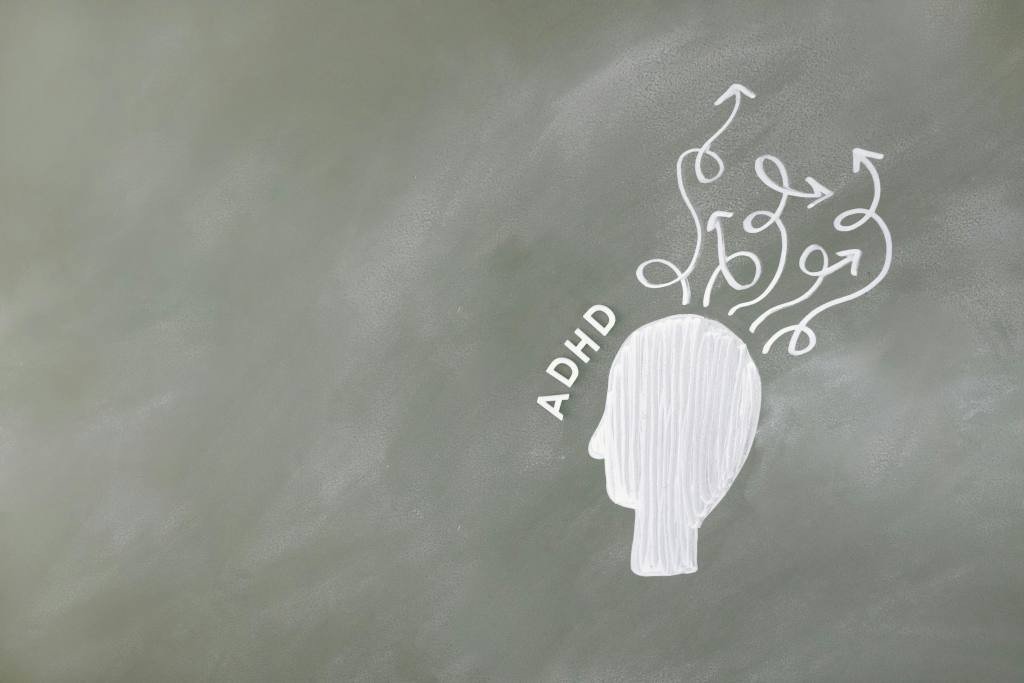
Attention-Deficit/Hyperactivity Disorder (ADHD) is often described in terms of attention, impulsivity, and hyperactivity. But these descriptions don’t always reflect what’s actually happening in the brain. Many people ask: how does ADHD affect the brain, particularly when it comes to focus and attention?

What Is Brain Regulation?
Brain regulation refers to the brain’s ability to manage and coordinate things like:
- Attention
- Impulse control
- Emotional responses
- Cognitive flexibility
- Energy levels
These functions rely on different parts of the brain working together.
When regulation is consistent, attention tends to follow. In contrast, disruptions in regulation can make focus feel less reliable.
Inconsistent regulation may lead to difficulty staying focused, greater variability in attention, or challenges with organization and follow-through..
When these systems are working well, thinking feels easier and more consistent. When they are under strain, even simple tasks can feel more demanding.
ADHD as a Regulation-Based Condition
In individuals with ADHD, these regulatory systems can function differently.
Rather than a simple “lack of attention,” there is often inconsistency in how attention is applied and sustained. As a result, focus may fluctuate significantly throughout the day.
These patterns can show up as:
- Periods of strong focus alongside periods of distraction
- Difficulty getting started or finishing tasks
- Fluctuations in mental energy
- A sense that focus takes more effort than it should
Variability in attention is a key feature of ADHD and reflects how the brain regulates activity.
Using Brain Mapping to Understand Regulation
In clinical settings that focus on brain function, Clinicians can use tools such as quantitative electroencephalography (QEEG), or brain mapping, to look at patterns of activity across the brain.
A QEEG does not diagnose ADHD, but clinicians can use it to observe how the brain is functioning at that time.
In some cases, brain mapping shows differences in how the brain manages attention, processing speed, or regulation. Importantly, Clinicians consider these patterns alongside a broader understanding of the individual.
Information gathered through brain mapping may help guide a more targeted approach.
At North Idaho Neurotherapy Clinic, Clinicians use QEEG findings as part of a broader process to better understand how the brain is functioning. From there, clinicians can select and adjust neurotherapy protocols over time to support regulation and more consistent cognitive performance.
The goal is to understand what the brain is doing and identify more effective ways to support regulation.

The Role of Cognitive Load and Stress
Additionally, regulation doesn’t happen in isolation. It’s influenced by things like:
- Sleep quality
- Stress levels
- Mental demand
- Environment
As these demands increase, the brain shifts its priorities accordingly.
Under increased demand, the brain focuses more on maintaining stability and less on higher-level processes like sustained attention and clear thinking.
As a result, focus often becomes less consistent, while everyday tasks may begin to feel more mentally demanding.
Attention can also vary depending on the situation, time of day, stress levels, or overall cognitive load.
This variability helps explain how ADHD affects the brain during periods of increased demand.
Overlap With Other Experiences
Difficulties with focus are not specific to ADHD.
For example, similar patterns can also show up with:
- Ongoing stress or burnout
- Poor sleep
- Recovery after concussion or mild traumatic brain injury
- Periods of sustained mental demand
Because these patterns can overlap, looking at overall brain function may provide broader insight than focusing on symptoms alone.
Functional Patterns, Not Fixed Limitations
The important thing to understand is that these patterns reflect how the brain is functioning in the moment. Additionally, over time, these patterns can vary depending on internal and external demands, as brain activity is constantly adapting to stimuli.
How ADHD Affects the Brain
Looking at ADHD through the lens of brain regulation offers a more complete understanding of attention.
Instead of asking why attention is “lacking,” it can be more helpful to consider:
- How the brain is regulating activity
- What demands currently affect it
- What influences consistency
At North Idaho Neurotherapy Clinic, this perspective is central to how attention and cognitive function are understood. By combining clinical insight with tools such as brain mapping, it becomes possible to better understand patterns of regulation and identify more targeted ways to support change over time.
Understanding how ADHD affects the brain can offer a more complete perspective on why attention may feel inconsistent.
Broader research into how ADHD affects the brain can be explored through resources such as the National Institute of Mental Health’s overview of ADHD.

Taking the Next Step
If you’re experiencing ongoing changes in focus, attention, or mental clarity, looking a little deeper may help identify what’s contributing to these patterns.
Ultimately, understanding how the brain is functioning provides a more complete picture and can help guide the next steps.
At North Idaho Neurotherapy Clinic, we take a personalised, brain-based approach to understanding patterns of attention and cognitive performance.
If you’d like to explore whether this approach may be a good fit, a consultation may provide greater clarity and direction.